
Understanding the Millennium Issue
What Is the “Millennium”?
The word millennium simply means “one thousand years.”
The term comes from Revelation 20:1–7, where the phrase “one thousand years” appears six times.
The key question in the debate is:
Should the “1,000 years” be understood literally or symbolically?
How we answer that question influences how we interpret the rest of biblical prophecy and the events surrounding the return of Christ.
What’s at Stake in the Millennial Debate?
Different millennial views are shaped by several important interpretive questions.
1. How Prophecy Should Be Read
Should prophetic passages be interpreted primarily literally, or should we recognize the symbolic nature of apocalyptic language?
2. Israel and the Church
Does Scripture teach one unified people of God, or does God have two separate redemptive programs for Israel and the church?
3. The Nature of the Kingdom of God
Is Christ’s kingdom primarily earthly and political, or spiritual and heavenly in its present form?
4. The Timing of End-Time Events
How do events such as the tribulation, antichrist, resurrection, rapture, and final judgment relate to one another?
5. Christ’s Reign
Does Christ reign physically on earth during the millennium, or is He currently reigning from heaven at the Father’s right hand?
6. The Binding of Satan
What does it mean when Revelation says that Satan is “bound”?
The Four Major Millennial Views
Christians throughout history have interpreted the millennium in several different ways.
Below is a brief overview of the four most widely discussed views.
Postmillennialism
Christ returns after the millennium
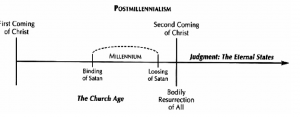
Postmillennialism teaches that the gospel gradually transforms the world, leading to a period of widespread righteousness and peace often called the millennium.
Key ideas
-
The world gradually improves through the spread of the gospel
-
The millennium is a later phase of the church age
-
Christ reigns from heaven through the influence of the gospel
-
After a brief rebellion led by Satan, Christ returns to judge the world
Common concern raised
Some passages suggest that the church age will remain a mixture of good and evil and may even grow more difficult toward the end (Matthew 13:24–30; 2 Timothy 3:1–5).
Historic (Traditional) Premillennialism
Christ returns before the millennium
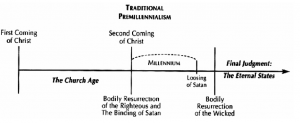
This view teaches that the world will grow increasingly troubled until Christ returns, defeats evil, and then establishes a literal thousand-year reign on earth.
Key ideas
-
The church often experiences tribulation before Christ returns
-
Christ physically reigns on earth during the millennium
-
Satan is bound during this period
-
After the millennium, Satan is briefly released before the final judgment
Common concern raised
This view often requires multiple resurrections and judgments and depends heavily on reading Revelation in strict chronological order.
Dispensational Premillennialism
Pre-tribulation rapture and a future Jewish kingdom
Dispensational premillennialism emphasizes a strong distinction between Israel and the church.
Key ideas
-
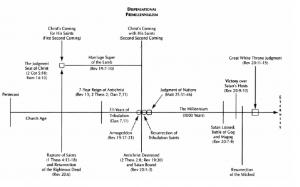
A secret rapture removes the church before the tribulation
-
A seven-year tribulation period follows
-
Christ returns to establish a millennial kingdom centered in Israel
-
Several stages of resurrection and judgment occur
Common concern raised
Critics argue that the concept of a secret rapture is not clearly taught in Scripture and can complicate the biblical timeline of end-time events.
Amillennialism
The millennium represents the present church age
Amillennialism interprets the “thousand years” symbolically, describing the period between Christ’s first and second comings.
Key ideas
-
The millennium is the present church age
-
Christ currently reigns from heaven
-
Satan’s power is limited during this era
-
Before Christ returns, Satan is briefly released
-
Christ returns once, bringing resurrection, judgment, and the eternal state
Common concern raised
This view depends heavily on recognizing the symbolic nature of apocalyptic literature.
How You Read Revelation Shapes Everything
The book of Revelation belongs to the genre of apocalyptic literature, which communicates truth through symbols, visions, and imagery (Revelation 1:1).
Because of this, interpreters approach the book in several ways.
Major Interpretive Approaches
Preterist
Most prophecies refer to events in the first century.
Historicist
Revelation presents a continuous timeline of church history.
Futurist
Most prophecies describe future end-time events.
Cyclical / Recapitulation
Revelation contains multiple parallel visions covering the church age, each ending with God’s final victory.
Some interpreters suggest that Revelation 20 begins a new cycle, rather than continuing the chronology of Revelation 19.
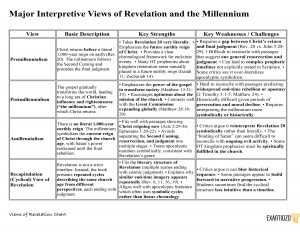
Major Views of the Millennium and Revelation
Revelation 20: The Three “Millennial Blessings”
The Binding of Satan
(Revelation 20:1–3)
The text explains that Satan is bound “so that he might not deceive the nations any longer.”
This theme connects closely to Christ’s earthly ministry.
Relevant passages include:
-
1 John 3:8 – Christ came to destroy the works of the devil
-
Matthew 12:29 – Jesus speaks of binding the strong man
-
Acts 26:18 – The gospel opens the eyes of the nations
This interpretation suggests that Satan’s binding limits his power to deceive the nations, allowing the gospel to spread.
The First Resurrection
(Revelation 20:4–6)
Some interpreters understand the “first resurrection” as a spiritual resurrection, referring to salvation and new life in Christ.
Scriptures describing salvation as resurrection include:
-
John 5:24–25 – Spiritual life now
-
John 5:28–29 – Bodily resurrection later
-
Ephesians 2:1, 5–6 – Dead in sin → made alive in Christ
-
Colossians 2:12–13 – Raised with Christ
-
Romans 6:3–4 – Newness of life
Those who share in this resurrection are promised deliverance from “the second death” (Revelation 20:6).
Reigning with Christ
(Revelation 20:4, 6)
The New Testament teaches that Christ already reigns as King.
Supporting passages include:
-
Acts 2:32–36
-
Ephesians 1:20–22
-
Hebrews 10:12–13
Believers also share in His reign.
-
Ephesians 2:6
-
Revelation 5:10
This reign is not primarily political but reflects spiritual victory and stability in Christ, even in the midst of suffering (Ephesians 6:10–17).
The Big Message of Revelation
Throughout the book of Revelation, one central question is repeatedly answered:
Who is truly in control?
The answer is clear.
Christ reigns as King, and God’s people overcome through faithful endurance.
Revelation was written not to produce fear or speculation but to strengthen the church with hope, courage, and perseverance.
Review Questions
-
What does Revelation 20:3 say is the purpose of Satan’s binding?
-
How does the spread of the gospel relate to Satan’s deception being limited? (Acts 26:18)
-
Why might Scripture describe conversion as resurrection? (Ephesians 2:5–6)
-
What does it mean for believers to reign with Christ even while facing suffering?
-
Which interpretive issue most influences your view: symbolic language, Israel and the church, or the structure of Revelation?